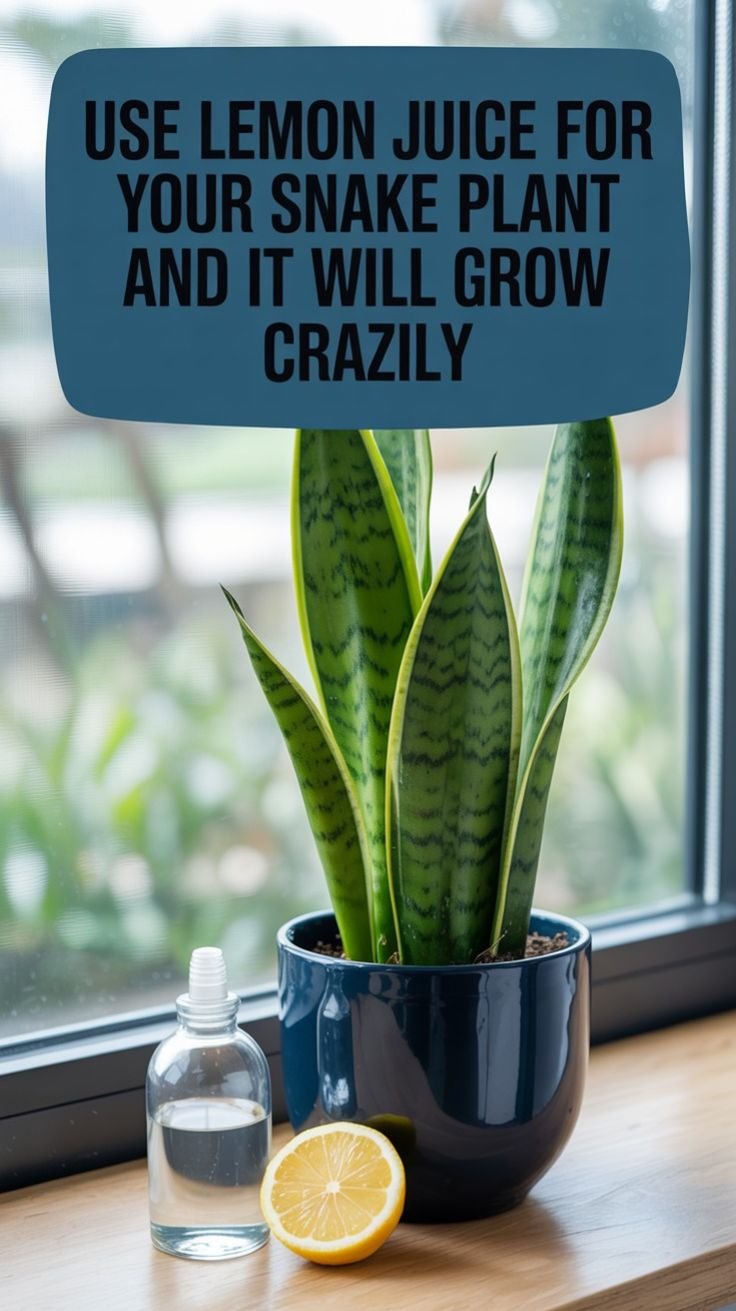
The secret to healthier, more vibrant snake plants might already be sitting in your kitchen — lemon juice!
Thanks to its natural acidity and antibacterial properties, lemon juice is an affordable, effective way to boost your snake plant’s overall health and appearance. Here’s how it works and how to use it safely.
Why Use Lemon Juice on Snake Plants

Snake plants (Sansevieria trifasciata) thrive in slightly acidic to neutral soil, ideally between pH 5.5 and 7.0.
When the soil becomes too alkaline—often from hard tap water, fertilizer salt buildup, or low-quality potting mixes—the roots struggle to absorb key nutrients like nitrogen and iron. This leads to slow growth, yellowing leaves, and a dull, unhealthy look.
That’s where lemon juice helps. It gently lowers the soil’s pH, making nutrients more accessible and helping tired plants bounce back. The same trick works wonders for other acid-loving plants like Christmas cacti and peace lilies.
You can easily check your soil’s pH using a soil test kit from any garden store. If it’s on the alkaline side, don’t pour lemon juice straight into the pot—follow the methods below for best results.
How to Use Lemon Juice for Snake Plants
1. Lemon Water Soil Drench
This simple solution helps promote lush green leaves, stronger roots, and faster growth.
- Mix 1 tablespoon of fresh lemon juice into 1 gallon (4 liters) of water.
- Use filtered or rainwater instead of hard tap water, as minerals in hard water can reduce effectiveness over time.
- Water your snake plant as usual using this mix—but only once every 4–6 weeks.
- Make sure the potting mix drains well to prevent root rot.
(For best results, use a well-draining snake plant soil mix.)
2. Lemon Juice Leaf Wipe

If your snake plant’s leaves look dusty or lifeless, try giving them a gentle lemon juice leaf wipe.
The mild acidity cuts through grime, hard water marks, and even traces of pests—leaving the leaves glossy and refreshed.
- Mix a small amount of lemon juice in water.
- Dip a soft microfiber cloth into the solution and gently wipe each leaf.
- Always test a small spot first and wait 24 hours to make sure there’s no reaction.
- If the plant responds well, repeat this cleaning every two months or whenever the leaves need a touch-up.
Pro Tip: Always wipe the leaves dry afterward to avoid acid spots or sunburn.
3. Lemon Juice Pest Mist

Pests like aphids and thrips might love your snake plant—but they hate anything acidic. A light lemon-water mist can keep them at bay naturally, without chemical sprays.
- Mix 1 tablespoon of lemon juice with 1 liter of water and pour it into a spray bottle.
- Mist the top and underside of the leaves lightly, focusing on areas where pests hide.
- Don’t soak the plant—just a gentle misting is enough.
- Use every few weeks for prevention or more often if pests are already present.
Pro Tip: Avoid spraying during the hottest hours of the day or when your plant sits in direct sunlight, as lemon juice can make the leaves more sensitive and lead to sunburn.
Important Things to Keep in Mind
- Never use pure lemon juice—it’s too acidic and can damage roots or scorch leaves.
- Skip this hack if your soil is already acidic (pH below 5.5). Adding more acid can do more harm than good.
- Check your drainage. Poor drainage and lemon juice together can encourage root rot.
- Watch for discoloration. If leaves fade or turn yellow, reduce how often you use lemon juice or dilute the mix further.
- Remember: Lemon juice is a temporary fix, not a long-term solution for alkaline soil.
Ready to give your snake plant this refreshing boost? Try it out and see how your plant responds—and if you’re feeling adventurous, bury a penny in the pot afterward. (We’ll let you discover why!)