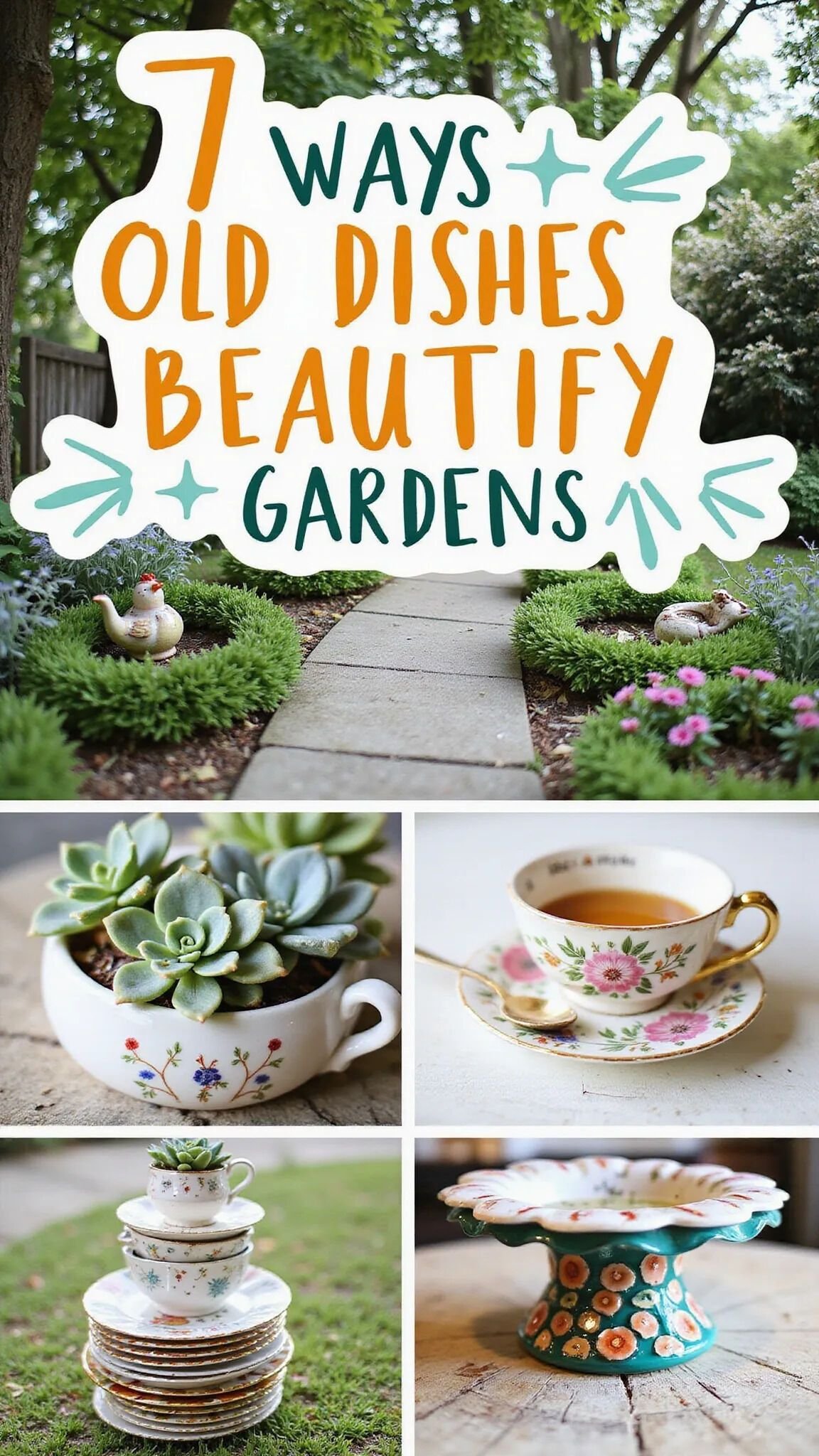
Last summer, while cleaning out my kitchen cabinets, I stumbled upon a pile of chipped dishes I’d been meaning to toss for months. But instead of throwing them away, I took them outside and turned them into something new — something beautiful. You’ve probably seen old ceramic plates or teacups at thrift stores without realizing their creative potential. Whether it’s a cracked teacup from your grandmother or a colorful plate from a flea market, these forgotten pieces can be reborn into charming garden art. Let’s explore how simple dishware can become your garden’s next showstopper.
Teacup and Saucer Planters for Whimsical Garden Displays
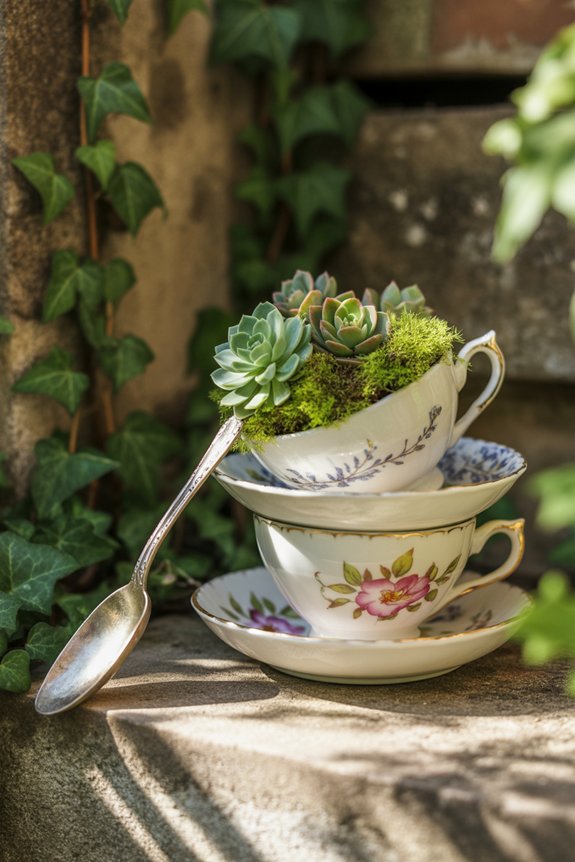
Those chipped teacups gathering dust in your cupboard? They’re about to get a second life. By turning them into tiny planters, you can bring a touch of vintage charm to your outdoor space. Start by gluing each teacup securely to its saucer using a strong adhesive like E-6000. Add a thin layer of pebbles at the bottom for drainage, then fill with a cactus soil mix. Succulents are the perfect plants for this — they thrive in small spaces and need very little water. Trim the lower leaves of your cuttings, leave about an inch of stem, and plant them carefully. Arrange the larger succulents first, followed by smaller ones for a balanced look. To finish, add a bit of moss over the soil for polish and texture, and maybe tuck in a few miniature figurines for whimsy. Place your new planters somewhere with bright, indirect sunlight, and water sparingly. These teacup gardens bring life, color, and personality to any balcony or window ledge — a lovely example of turning waste into wonder.
Mosaic Stepping Stones from Broken Dish Fragments
If you’ve got broken dishes lying around, don’t toss them — turn them into something eye-catching and practical. Mosaic stepping stones are not only beautiful but also add a personal touch to your garden pathways. Begin by breaking your dishes into manageable pieces — wrap them in a towel and gently tap with a hammer (wear gloves, goggles, and a mask for safety). Sort the colorful fragments by size and color, then lay them out on a flat surface to plan your design. Pour fresh mortar into a mold, press the dish pieces firmly into the mixture, and work quickly — it sets within 20 minutes. For an extra artistic touch, add marbles, stones, or old keys for variety. Let the stone cure overnight, then smooth any sharp edges. The result? Durable, stunning garden art that’s both functional and conversation-worthy. Each step you take will feel like walking across your own custom artwork.
Vintage Dish Totems as Garden Focal Points
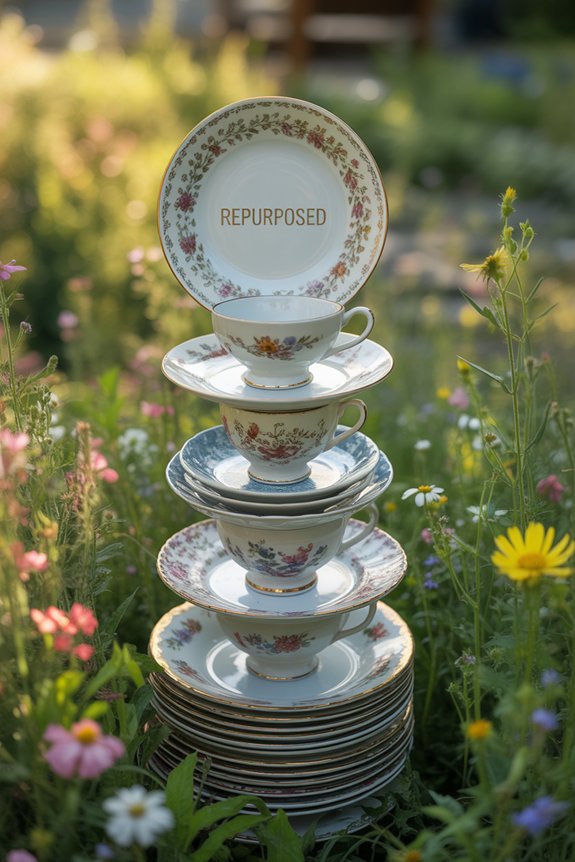
Few things make a garden more striking than a well-crafted vintage dish totem. These stacked sculptures combine plates, bowls, cups, and goblets into elegant vertical art pieces. Gather mismatched thrifted dishes or unused ones from your own collection, and start stacking them in visually interesting ways. Use a strong epoxy glue to secure each piece, making sure everything stays balanced. For extra support, insert a rebar stake into the ground before stacking, so your sculpture stays steady even in the wind. The fun part comes in mixing materials — glass, porcelain, and metal all combine beautifully. You can even fill the top dish with water to create a makeshift birdbath. Add decorative touches like figurines or seasonal accents inside the bowls for personality. These totems are a creative blend of recycling and sculpture, adding instant elegance and charm to any garden.
Elegant Bird Baths from Decorative Plates and Bowls
Transform your thrifted dishware into an elegant bird bath that’s as functional as it is beautiful. Start by turning a decorative plate upside down to form the base. Stack bowls or smaller plates on top using waterproof glue or threaded rods for reinforcement. You can mix and match designs for a playful, eclectic look or stick to one color palette for sophistication. To make your creation bird-friendly, add glass pebbles or aquarium stones for traction and sparkle. Stability is key, so make sure your tower is balanced before the glue sets. Let it dry completely overnight before moving it outdoors. Once ready, fill the top bowl with fresh water and place it where birds can easily find it. You’ll soon have a piece that draws both admiring neighbors and grateful feathered guests.
Colorful Dish Shard Edging for Garden Bed Borders
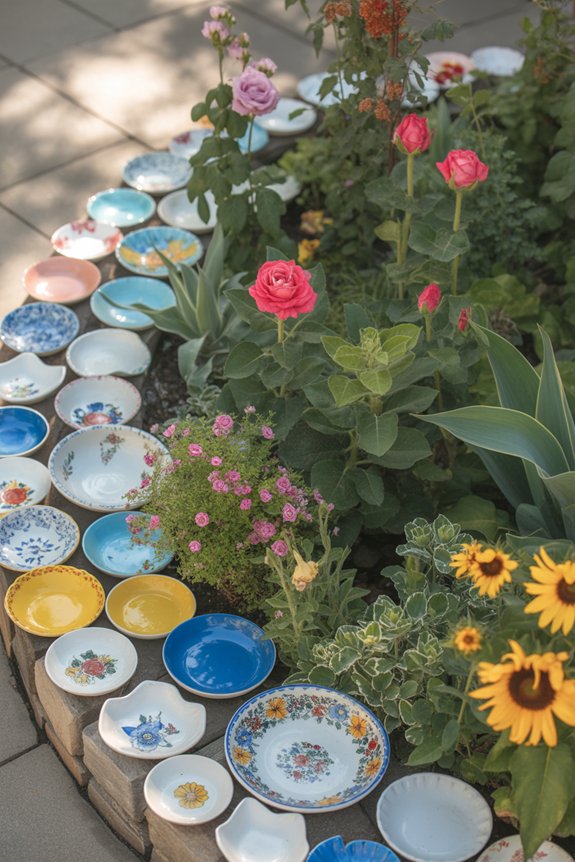
If you’ve been hanging onto chipped plates because they’re too pretty to throw out, here’s the perfect solution: turn them into colorful garden edging. Begin by safely breaking your dishes into shards — always wear goggles and gloves. Clean and level your garden border, then create a sturdy sand or gravel base. Arrange the ceramic pieces in patterns that please your eye — perhaps alternating colors or keeping things monochromatic for simplicity. Secure everything with mortar to hold it in place. Not only does this edging look incredible, but it also helps suppress weeds and defines your garden beds beautifully. The combination of recycled art and practicality makes this one of the most satisfying upcycling projects you’ll ever try.
Musical Wind Chimes from Vintage Silverware
If your garden needs a touch of sound, old silverware can become delightful wind chimes. Take your unused forks and spoons, flatten them gently with a hammer to mellow out their tone, and drill small holes near the handles. Thread them with fishing line or thin wire, and attach them to a base — a colander, metal strainer, or even a large fork works perfectly. When the wind passes through, your creation will produce soft, tinkling melodies that add a soothing atmosphere to your garden. Every breeze will make your upcycled art come alive with music, giving your outdoor space a sense of peace and playfulness.
Ceramic Herb Markers from Dish Fragments
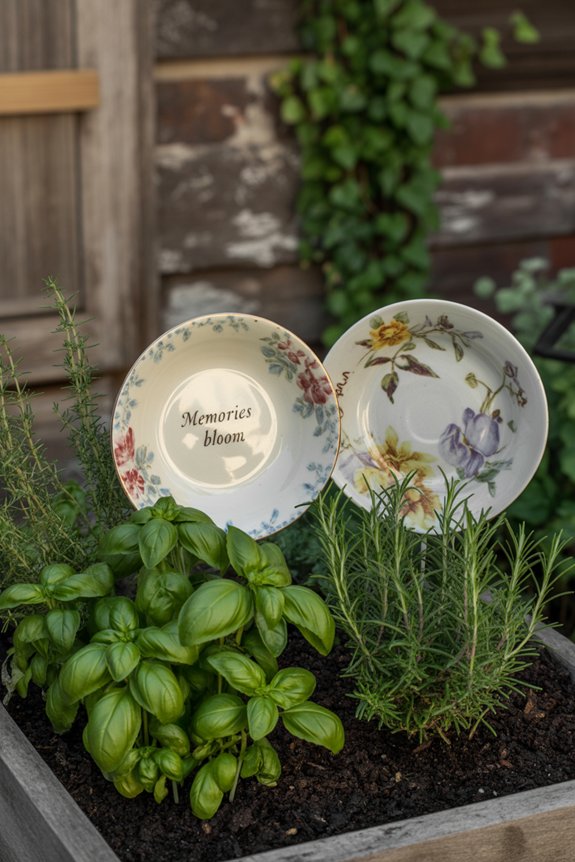
Broken ceramic pieces can also be turned into durable herb markers. Gently break your old dishes into smaller, workable pieces — irregular shapes are part of their charm. Glue fragments together into small rectangles or organic leaf-like forms, then press rubber stamps into them before they fully harden to add herb names or decorative patterns. Once dry, seal the pieces with clear outdoor varnish to protect them from the elements. These markers are weather-resistant and nearly indestructible, making them ideal for organizing herb gardens. They’re practical, beautiful, and completely unique — proof that even broken things can have lasting purpose.
Creating Cohesive Color Schemes with Mixed Dishware
When you’re working with mismatched pieces, it’s easy to feel overwhelmed by all the colors and patterns. But with a little thought, you can create harmony out of chaos. Start by identifying one dominant color that appears in several pieces, then use that shade as your base. Build around it using complementary or analogous tones — for instance, blues pair beautifully with oranges, while greens flow seamlessly with yellows. Group items by color families instead of trying to match sets. A floral teacup and a solid pastel bowl can work together if they share similar hues. The trick is to make it look intentional — this approach creates cohesion while still celebrating variety, turning thrifted chaos into artful coordination.
Sourcing and Weatherproofing Vintage Dishes for Outdoor Projects
The fun begins with the hunt. Thrift stores, flea markets, estate sales, and garage sales are goldmines for unique dishware at low prices. You might even uncover forgotten treasures in your own attic. Once you’ve gathered your pieces, prepare them for the outdoors. Use E-6000 or JB Weld for strong bonds and seal gaps with GE Silicone II Clear Caulk to prevent water damage. Add a coat of weather-resistant paint to protect against fading and cracking. If drilling holes, use ceramic-safe bits and go slowly to avoid breakage. For windy areas, anchor taller projects with stakes or rebar, and give your creations a quick inspection every few months. With care, your dish art will last through multiple seasons without losing its charm.
Final Thoughts
With just a little creativity, you can turn chipped dishes, cracked cups, and forgotten plates into garden treasures. Each project — from mosaic stepping stones to whimsical teacup planters — transforms discarded items into something both beautiful and meaningful. You don’t need to be an artist, just willing to experiment and have fun. So the next time you find an old dish you think is useless, look at it again. In your hands, it might just become your garden’s next masterpiece — a blend of creativity, sustainability, and personal expression that makes your outdoor space truly one of a kind.