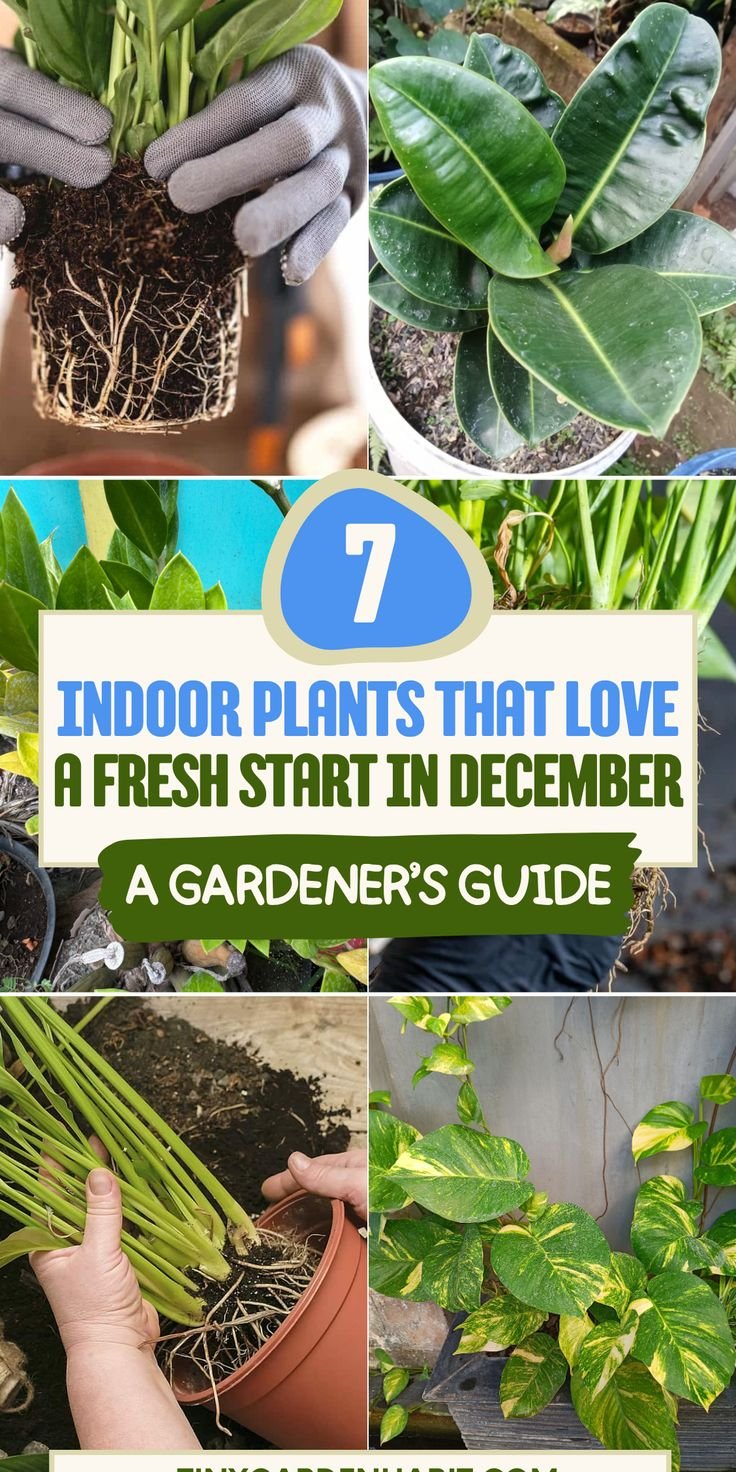
As the year begins to wind down, December may not seem like the ideal time to repot your plants — but for certain species, it’s actually one of the best opportunities to help them thrive. Many indoor plants slow their growth during winter, but some continue to photosynthesize and benefit from fresh soil, better drainage, and a little extra root space. Repotting now gives them a healthy foundation to carry into the new year.
Here are seven plants that respond beautifully to repotting in December — and a few tips to keep them happy and growing strong.

- Peace Lily (Spathiphyllum)
Elegant and resilient, Peace Lilies are loved for their lush green leaves and striking white blooms. However, they often outgrow their pots quickly, leading to root congestion that can stunt growth. Repotting in December gives them fresh soil and room to expand while they continue absorbing light through the cooler months.
How to Repot: Choose a pot just 1–2 inches larger than the current one. Use a rich, moisture-retentive but well-draining soil mix. After repotting, water lightly and keep the plant in indirect sunlight to avoid stress. - Christmas Cactus (Schlumbergera)
The Christmas Cactus is a festive favorite, known for its colorful blooms around the holidays. While it prefers a snug fit, it still needs new soil every few years to stay healthy. If yours hasn’t been refreshed in a while, repot it right after its flowering season in December.
How to Repot: Use a light, fast-draining soil with sand or perlite. Avoid oversized pots — this plant thrives in slightly tight spaces. After repotting, keep the soil just barely moist until new growth appears. - Snake Plant (Sansevieria)
Snake Plants are nearly indestructible, but even these hardy plants need fresh soil every couple of years. If the roots are pushing against the pot or the soil feels compacted, December is a calm time to repot before spring growth begins.
How to Repot: Select a pot with excellent drainage and a gritty, cactus-style mix. Handle the thick roots carefully — they can bruise easily. Once repotted, place the plant in low to moderate light and water sparingly. - Fiddle Leaf Fig (Ficus lyrata)
This dramatic statement plant can be sensitive, so timing matters. Repotting in December, when it’s entering a slower growth phase, reduces the risk of shock and helps stabilize it before the active spring season.
How to Repot: Choose a pot 2–4 inches wider than the current one and fill it with a well-draining soil rich in organic matter. Gently loosen the roots, remove dead ones, and water thoroughly after repotting. Keep it in bright, indirect light while it adjusts. - Pothos (Epipremnum aureum)
Pothos plants are among the easiest to grow, often trailing beautifully over shelves or hanging baskets. But they grow quickly, and roots can easily crowd the pot. Repotting in December allows them to rest and rebuild before their spring surge.
How to Repot: Use a good-quality, all-purpose mix and a pot that’s just slightly bigger. Check the roots — if they’re circling the pot or poking through drainage holes, it’s time. Water deeply after repotting and return it to a warm, bright spot. - Rubber Plant (Ficus elastica)
Rubber Plants slow their growth in winter, which makes December a perfect low-stress time to repot. The roots can spread comfortably without overwhelming the plant with sudden growth demands.
How to Repot: Use a pot with drainage holes and nutrient-rich soil. Keep the root ball mostly intact to avoid shock, and water lightly for the first few weeks. The plant will thank you with glossy new leaves come spring. - ZZ Plant (Zamioculcas zamiifolia)
The ZZ Plant is famous for its resilience, but when its thick roots start pushing against the pot, it’s ready for an upgrade. Repotting in December helps refresh the soil while giving it space to store moisture for the drier winter months.
How to Repot: Choose a slightly larger pot with good drainage. Use a loose, well-draining mix — a blend of potting soil and perlite works well. Avoid overwatering afterward, as ZZ Plants prefer to dry out between drinks.
December Repotting Tips:

- Inspect Roots: Before repotting, look for signs of rot, pests, or overcrowding. Trim away damaged roots.
- Water Lightly: After repotting, water just enough to moisten the soil — too much can shock the plant.
- Match the Soil to the Plant: Use the right soil type for each plant; succulents, tropicals, and foliage plants all have different needs.
- Avoid Oversized Pots: Large pots can trap excess water, leading to root rot. Go up one size only.
December might seem like a quiet month for your indoor garden, but it’s actually a chance to reset and prepare your plants for a new cycle of growth. With the right soil, proper drainage, and gentle aftercare, these seven species will reward you with healthy, vibrant foliage all through winter and into spring.