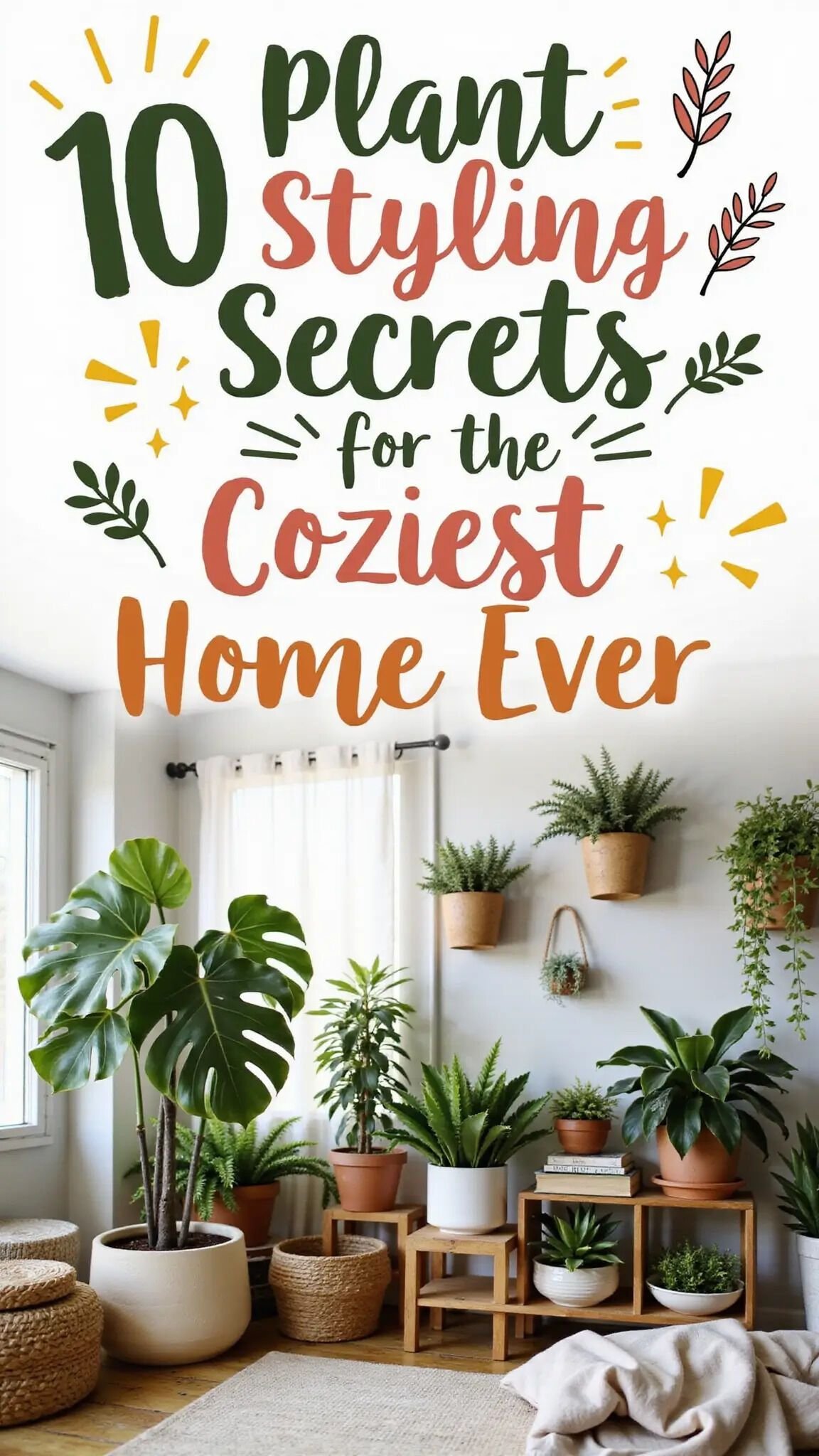
I’ve helped transform countless homes with the magic of indoor plants—and I can’t wait to share my favorite styling secrets with you. Whether you’re just getting started or already a seasoned plant lover, these ten easy ideas will help you create that cozy, Instagram-worthy space you’ve been dreaming of.
From statement corners that wow your guests to clever ways to style your window sills, let’s turn every corner of your home into a lush, welcoming retreat.
Key Takeaways
- Group plants in threes with different heights and textures to create layers and depth.
- Fill empty corners with large statement plants and smaller accents for balance.
- Match your planters to your home’s design—neutral ceramics for modern rooms, woven baskets for rustic warmth.
- Group plants with similar needs to keep them thriving in their ideal microclimate.
- Use vertical space with hanging planters or wall gardens to expand your greenery without crowding your floors.
Creating a Statement Plant Corner

When you’re ready to transform a dull corner into a stunning focal point, start with a large anchor plant—a Fiddle Leaf Fig or Monstera is perfect. Place it in a square or rectangular planter that fits neatly against the walls.
Then, layer smaller plants at different heights using stands or stacked books. Don’t shy away from mixing textures—pair broad, glossy leaves with soft, trailing vines like Pothos or String of Hearts.
Finish the look with a cozy chair nearby, and you’ve got yourself a photo-ready plant nook that’s both vibrant and inviting.
Mastering the Art of Plant Grouping

Grouping plants is like curating your own mini garden scene. I always start with light requirements—sun lovers near windows, shade dwellers in cozier corners.
Next, I match watering needs so no plant suffers from too much or too little care. You can even include a “signal plant” that droops when it’s time to water.
Finally, group “climate buddies” together—tropical plants love sharing humidity, while succulents thrive with their dry companions. Mix pot sizes, shapes, and colors for a lively, natural look.
Maximizing Vertical Space

If floor space is tight, look up! Hanging planters instantly add dimension and charm to your room.
Macramé hangers with trailing Pothos or Spider Plants bring an airy, bohemian feel, while tiered shelving or wall-mounted planters create a structured, modern look.
Try repurposing an old ladder as a plant stand or frame succulents on wire mesh—these “living artworks” make your space come alive.
Choosing the Perfect Planter Combinations

Great plant styling isn’t just about the greenery—it’s also about the containers. Mix tall statement plants with trailing varieties that spill gracefully over the pot’s edge.
Match your planter materials to your decor: terracotta and woven baskets add warmth, while sleek ceramics offer a clean, modern edge.
Always ensure good drainage and consider each plant’s mature size so your display stays beautiful and balanced as it grows.
Styling Window Sills With Sun-Loving Plants

Your window sills are prime real estate for greenery. Match your plants to the direction of sunlight:
For those blessed with south-facing windows, you can’t go wrong with sun-loving succulents and vibrant aloe vera.
If you’re working with east-facing windows, try a gorgeous Fiddle Leaf Fig or a lush Boston Fern. Adding herbs like basil and thyme will thrive here too, since they need full sun exposure.
Got a north-facing window? Don’t worry! Peace Lilies and Snake Plants will thrive there, bringing life to even the shadiest spots.
With the right plant in the right spot, your window sills become mini sanctuaries of sunlight and life.
Building Natural Room Dividers

Plants can define spaces just as beautifully as walls do. Use tall, lush varieties like Rubber Plants and Areca Palms to separate living and dining areas.
For a layered effect, arrange plants in odd-numbered groups, combining upright and trailing species.
Hanging planters or freestanding structures can double as “green curtains” that freshen the air and muffle sound—stylish and functional!
Designing a Living Wall Display

A living wall might sound complex, but it’s surprisingly simple to create. Start small with easy-care plants like Pothos, Ferns, and Philodendrons in wall-mounted planters or a pegboard system.
Mix in preserved moss or faux greenery to fill gaps, and vary leaf shapes for visual texture.
Soon, you’ll have a vertical garden that feels like a slice of the rainforest right inside your home.
Mixing Plant Heights and Textures

Visual harmony comes from contrast. Combine tall, dramatic plants in corners with smaller tabletop companions, using stands and stools to vary elevation.
Mix smooth leaves with textured ones, and balance trailing vines against upright stems.
Grouping in threes always works wonders—and matching planter tones to your decor ties everything together seamlessly.
Incorporating Plants Into Existing Decor

Think of plants as the final, organic layer of your interior design. Place them among books, candles, or photo frames to soften lines and bring warmth.
Bathrooms love humidity-friendly plants like Ferns and Orchids, while vintage teacups or jars can house charming mini succulents.
The goal is effortless flow—plants that feel like they’ve always belonged in your space.
Selecting Plants for Different Light Conditions

Light is the secret ingredient that makes or breaks your indoor garden. South-facing spots are perfect for sun-loving plants like succulents and cacti, while east-facing windows are ideal for tropical beauties that prefer bright, indirect light.
Don’t worry if you’ve got a darker corner—there’s a plant for that too! Snake Plants and ZZ Plants will thrive in low-light areas, while medium-light lovers like Pothos can happily grow a few feet away from brighter windows.
If your plants start looking leggy or pale, they’re probably telling you they need a lighting adjustment. Once you get it right, they’ll flourish beautifully.
Frequently Asked Questions
How Often Should I Rotate My Indoor Plants?
Rotate your plants every 1–2 weeks with a quarter turn—it helps them grow evenly. Align rotation with your watering schedule to make it easy to remember.
How Do I Protect Furniture From Water Damage?
Place waterproof saucers under pots, use cork or silicone mats, and wipe spills immediately. For valuable furniture, apply a thin coat of polyurethane sealer.
Can Indoor Plants Attract Insects?
Yes, but prevention is simple. Inspect new plants before bringing them home, avoid overwatering, and maintain good air circulation. If pests appear, isolate and treat the plant quickly.
Should I Mist My Plants?
Misting helps tropical plants, but not all need it. Mist in the morning, two to three times a week, especially for plants with thin leaves. Avoid misting succulents or fuzzy-leafed plants.
How Do I Keep Cats From Eating My Plants?
Cats dislike aluminum foil and citrus scents. Place foil around the soil or spray plants with diluted citrus water. You can also offer cat grass as a safe alternative.
Final Thoughts
Like Alice stepping into her wonderland, you’re now ready to create your own lush paradise. Designing with plants doesn’t require a green thumb—just creativity, patience, and a touch of curiosity. Let your inner plant stylist bloom, and soon your home will feel like the serene oasis you’ve always imagined.